

Get free quotes from EHR consulting near you
Takes about a minute. Free, no obligation; providers reply to you directly.
A colleague of mine — fifteen years doing EHR implementations — called me in a panic last year. His client’s practice manager had just forwarded him a vendor email: “Our new AI handles everything your consultant does, automatically.” He wanted to know if he should start updating his resume.
He shouldn’t. But the question isn’t crazy.
The Short Version:AI is eating the routine parts of EHR consulting — documentation, transcription, basic code suggestions — but it can’t replace the judgment calls that actually determine whether an implementation succeeds or fails. The consultants who understand this are already repositioning. The ones who don’t are the ones who should be nervous.
Key Takeaways
- Ambient AI scribes cut documentation time by 15–50%, and AI-assisted coding is real — but these tools need someone to configure, oversee, and validate them
- Clinical decision support AI saved 82.6 hours per clinician per year in one real-world study — without replacing a single consultant
- The $100M+ prior authorization AI market is growing 10x year-over-year; that’s admin work shifting, not consultant work disappearing
- The consultant’s job is changing from “hands on keyboard” to “human in the loop” — which is actually a promotion, not a layoff
What AI Is Actually Doing Inside EHRs Right Now
I’ll be honest — the capabilities are more impressive than most consultants want to admit.
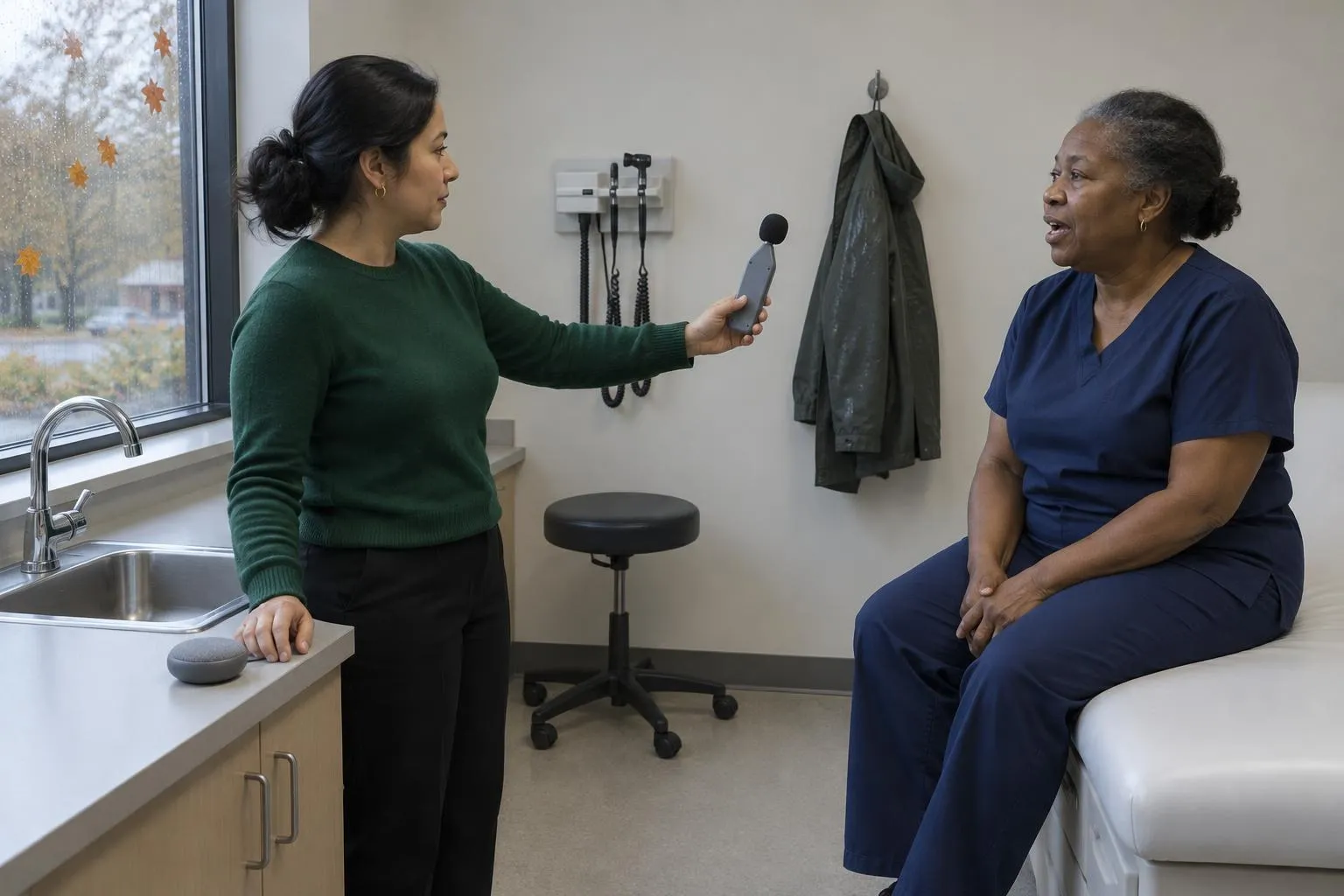
Ambient scribes now sit in the exam room, listen to provider-patient conversations, and generate structured clinical notes in real time. Products like Althea Smart EHR embed this natively — dual-mode capture, voice and text, auto-populating problem lists, order sets, and billing codes. The documentation burden that burned out an entire generation of physicians? AI is making a serious dent. We’re talking 15–50% reductions in documentation time. “Pajama time” — those hours providers spent finishing charts after the kids went to bed — is genuinely shrinking.
On the revenue cycle side, NLP is suggesting ICD and CPT codes, predicting claim denials before submission, and flagging eligibility issues before they become write-offs. The prior authorization market alone hit $100 million in 2025, growing 10x year-over-year. AI agents are extracting EHR data, applying clinical reasoning, and auto-submitting auth requests in minutes instead of hours.
A peer-reviewed study from the Bruyère Family Health Team in Canada put numbers to the clinical decision support piece: AI-assisted chart review dropped from 445 seconds to 249 seconds per case — saving 82.6 hours per clinician per year — with no measurable drop in decision accuracy.
That’s not hype. That’s published data.
Here’s What Most People Miss
Those tools don’t implement themselves.
Every ambient scribe needs to be configured for the specific specialty’s documentation patterns. Every NLP coding engine needs to be tuned against the practice’s payer mix and historical denial reasons. Every CDSS alert needs to be calibrated so it’s useful rather than just more noise on top of already overwhelming alert fatigue.
The consultant who understands Epic’s decision support framework, who’s seen three practices blow up their revenue cycle by deploying AI coding suggestions without a coder-review workflow, who knows which Meditech modules play nicely with third-party ambient tools — that person’s value just went up.
Reality Check:The AI doesn’t know that your cardiology group bills global surgical packages differently than your payer contracts allow. It doesn’t know your state’s Medicaid prior auth rules changed in February. It doesn’t know your front desk staff will completely ignore any workflow that adds more than one click. A consultant knows all of this on day one.
The Tasks AI Is Actually Taking
Be honest with yourself about what’s changing:
| Task | AI Impact | Consultant Role |
|---|---|---|
| Real-time documentation / scribing | High — 15–50% time reduction | Configure, validate, train staff |
| ICD/CPT code suggestions | High — NLP reduces denials | Audit workflows, oversee accuracy |
| Prior authorization submissions | High — 10x market growth | Implement, monitor exception handling |
| Chart review time | Moderate — 82.6 hrs/yr saved per clinician | Evaluate CDSS fit for practice type |
| Vendor selection | Low | Still requires needs assessment + negotiation |
| Workflow redesign | Low | Requires change management expertise |
| MIPS/interoperability compliance | Low | Regulatory interpretation is human work |
| Data migration | Low | High-stakes, error-intolerant |
| Staff training | Low | Behavioral change doesn’t automate |
| Post-go-live optimization | Low | Pattern recognition over months of data |
The bottom half of that table is where engagements actually succeed or fail.
The Repositioning That’s Already Happening
Smart consultants aren’t fighting AI. They’re becoming the people who know how to deploy it responsibly.
“Ambient-first documentation” is expected to be a default configuration in major EHR vendors within 12–24 months. That means every practice switching EHRs in 2026 or 2027 will need someone who understands how the AI layer interacts with the underlying data model. That’s a new skill set, and right now it’s not crowded.
Pro Tip:If you hold a CPHIMS or RHIA credential and haven’t taken a deep look at your target EHR’s native AI features in the last six months, you’re already behind. The vendors are shipping fast. Epic’s ambient documentation rollout, Oracle Health’s AI roadmap, Athenahealth’s prior auth automation — this is the product surface your clients will be asking about next quarter.
The consultants most at risk aren’t the experienced ones — they’re the mid-tier generalists who built their value proposition entirely around tasks the software now does passably well on its own. If your pitch is “I’ll help you set up your templates and train your staff on basic navigation,” that’s a shrinking market. If your pitch is “I’ll help you implement AI-assisted coding, design the human-review workflow around it, and make sure your compliance posture holds up when CMS audits a flagged claim” — you’re selling something that doesn’t exist in a box yet.
The Honest Answer
AI won’t replace EHR consultants. It will replace the parts of EHR consulting that probably shouldn’t have required a consultant in the first place.
The judgment calls — which vendor fits a three-physician rural practice versus a 40-provider multispecialty group, how to sequence a migration from a 15-year-old legacy system without destroying six months of billing history, how to get resistant physicians to actually change their documentation habits — those still require a human who’s been in the room when things go wrong.
What’s changing is the baseline. A consultant who can’t have an intelligent conversation about ambient AI, NLP coding tools, and AI-driven revenue cycle analytics will look out of touch to a practice manager who’s been reading the vendor newsletters. The credential matters less. The current knowledge matters more.
Practical Bottom Line
If you’re a practice manager evaluating EHR consultants: ask them specifically what they know about your target EHR’s AI features. Their answer will tell you whether they’re current.
If you’re a consultant: stop treating AI as a threat to manage and start treating it as a capability to master. Read the deployment docs for Epic Ambient, Oracle’s Clinical AI, and whichever ambient scribe is gaining traction in your specialty vertical. The consultants who own this transition will have more work than they can handle.
If you’re researching the field: start with The Complete Guide to EHR Consultants for the full picture of what the role actually involves — then come back here when you want to understand where it’s going.
The technology is moving fast. The need for experienced human judgment in high-stakes healthcare IT decisions is not going away. Those two things are both true at the same time.
Done reading? Get quotes from EHR consultants near you.
Takes about a minute. Free, no obligation; providers reply to you directly.
Popular cities:
Nick built this directory to help medical groups find credentialed EHR consultants without wading through vendors who mostly want to sell software subscriptions — a conflict of interest he ran into when trying to help a family member’s practice navigate a painful EMR migration.